
Motionwell has built automation systems for global medical device manufacturers: a tray-fed filling and sealing machine for syringes, blood collection tubes and reagent vials, inline vision inspection on the product path, and vibratory bowl feeder upgrades with starwheel indexing. For multi-station assembly we design rotary indexing machines to the same practice, and how we design multi-station rotary assembly machines sets out those decisions station by station.
We design for the realities of medical device production: process repeatability at every station, electronic records that hold up under audit, and machines that floor operators can run and maintain without specialized programming knowledge.
What Automation Does Motionwell Build for Medical Device Manufacturers?
Scope can run from a single medical device assembly machine to a combined assembly and inspection line. The product determines station tolerances, contact materials and the records needed for release. Cleanroom equipment design addresses materials and airflow; rotary indexing assembly design explains station balance, press monitoring and vision gates. The capability range connects those functions with filling, feeding and controls.
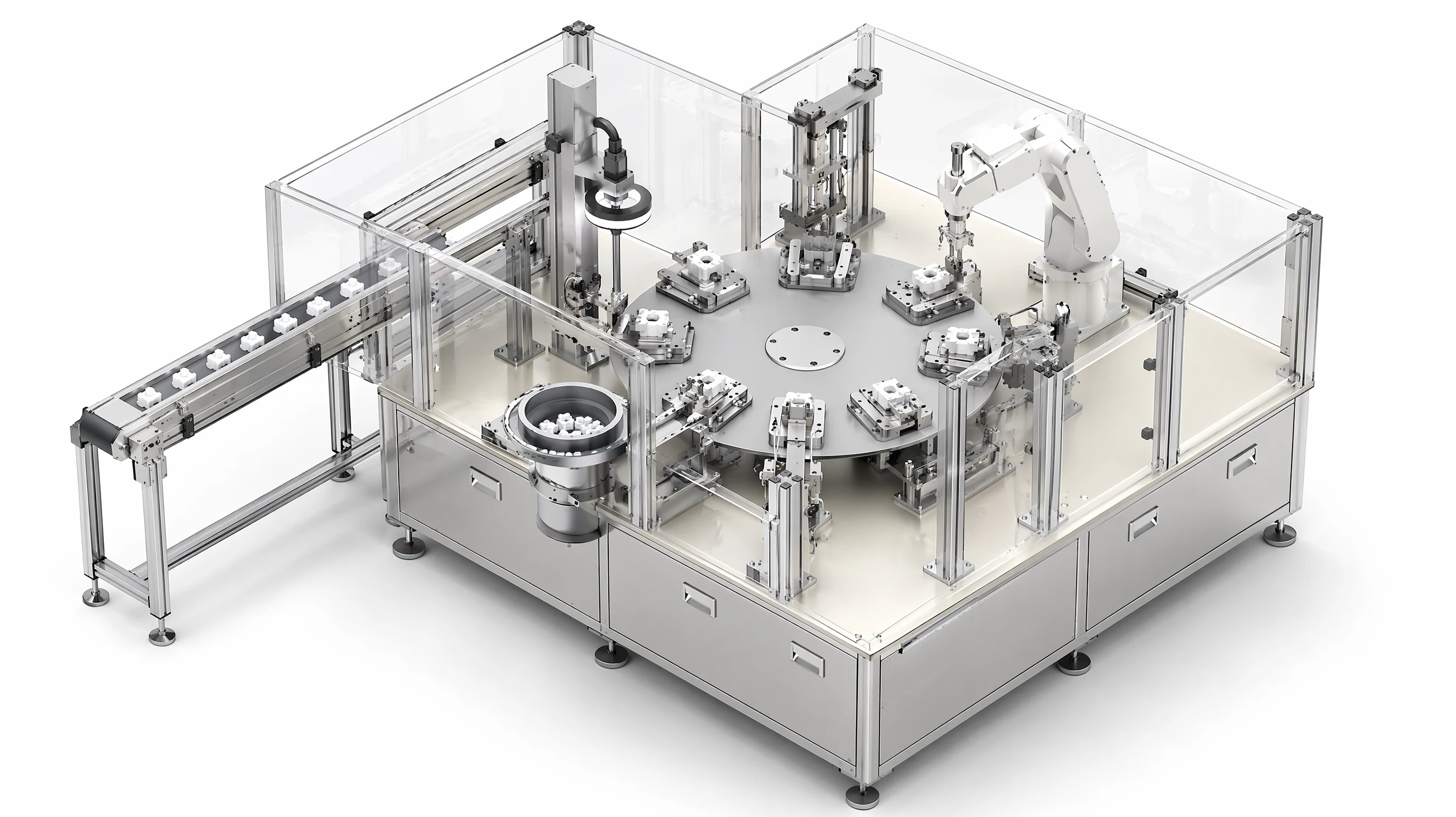
- Multi-station rotary indexing assembly for medical device components, a 12-station dial for example, with servo transfer, force-monitored press-fit and an inline vision gate at each critical station
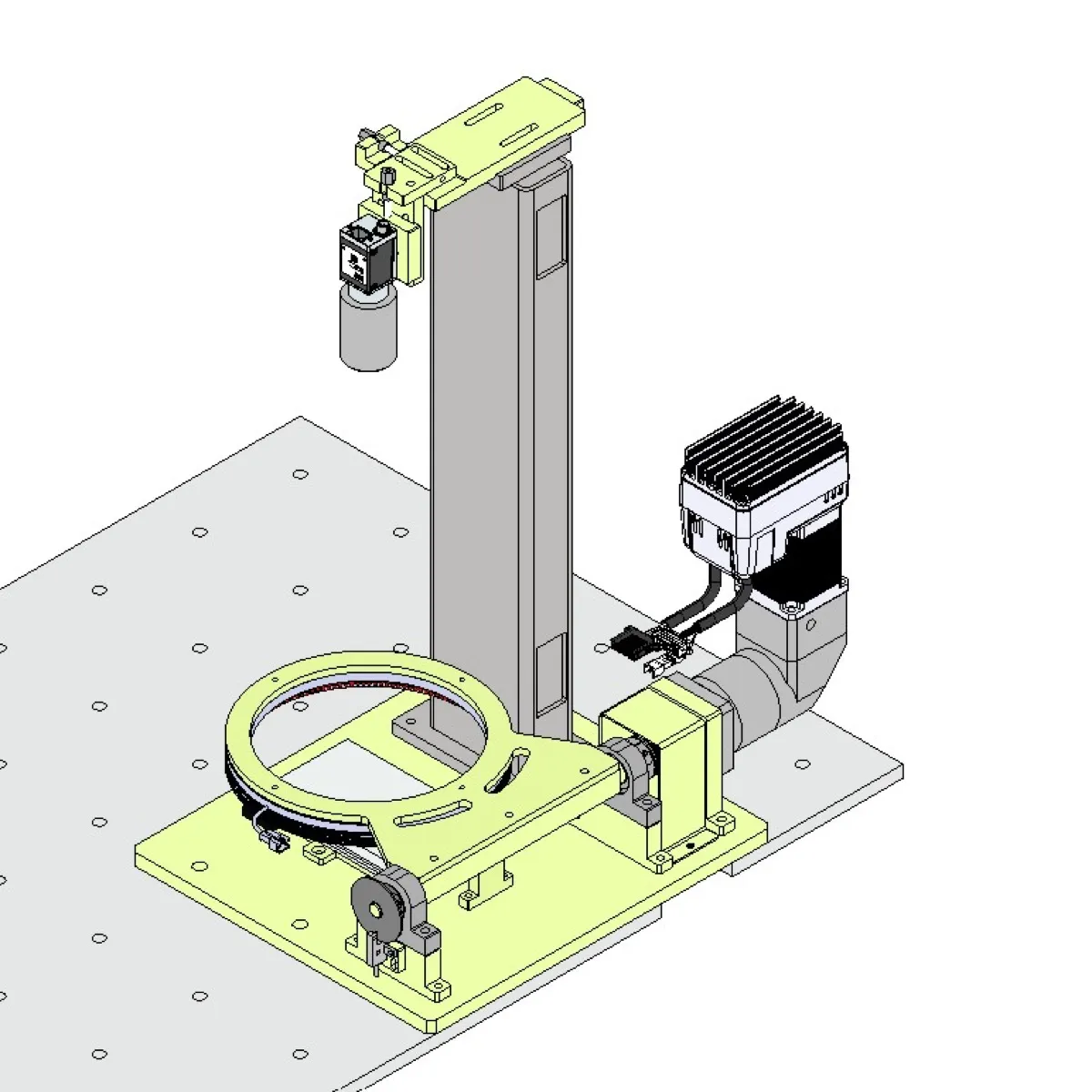
- Vision inspection stations with contour recognition and OK/NG auto-sorting under controlled ring lighting, from a self-contained smart camera at a single gate to a PC-based system across several views
- Filling and sealing for syringes, blood collection tubes, and reagent vials on a tray-fed platform: three heads dosing in parallel, with fill volume, tolerance band and rate specified per product and closure, and the container format carried in machined tray sets
- Vibratory bowl feeder modification and upgrade with starwheel indexing and tray feeding for high-mix device components
- Process repeatability with quality gates at every critical assembly step and automatic NG rejection
- ISO Class 7/8 cleanroom compatibility with appropriate material selection, surface finish, and airflow management
- GMP/FDA compliance readiness with IQ/OQ/PQ validation documentation support
- Operator ergonomics with poka-yoke mistake-proofing and clear HMI status displays
- High-speed SCARA pick and place with vacuum EOAT for delicate component sorting
- Vibratory bowl feeders and starwheel indexing mechanisms for vial, syringe, and tube handling
- Machine vision inspection with ring lighting, servo rotation platforms and programmable inspection recipes, with the lighting settled before the camera because a defect the illumination does not separate from the background cannot be recovered with resolution
- PLC and HMI control carrying 21 CFR Part 11 traceability patterns and device history record logging, built on the control platform your site already programs and stocks spares for
Which Medical Device Machines Has Motionwell Delivered?
Featured: Medical Device Filling & Inspection
Motionwell has delivered multiple automation systems for global medical device manufacturers from our Woodlands Link facility. Scope includes tray-fed filling and sealing for syringes, blood collection tubes and reagent vials, inline vision inspection, vibratory feeder upgrades, and electronic device history records under 21 CFR Part 11. Multi-station rotary assembly is designed to the same practice on each enquiry, and how we design multi-station rotary assembly machines sets out the decisions involved.
- Client: Global medical device manufacturer
- Scope: Filling and sealing, vision inspection, feeder systems, electronic records
- Key specs: Three-head parallel dosing on a tray-fed platform, container format carried in machined tray sets, 21 CFR Part 11 electronic records
- Standards: ISO 9001:2015, ISO Class 7/8 cleanroom compatible, GMP/FDA ready
How Precise Does a Medical Device Assembly Machine Need to Be?
Precision is only worth specifying where it changes the outcome at the station. On a medical build that means:
- Stainless steel construction, with the grade and the product-contact surface finish specified against the cleaning chemistry instead of carried over as a default
- Servo-driven indexing with the dial’s positioning repeatability specified against the tightest station tolerance and never taken from the indexer catalogue
- Vibratory bowl feeders with starwheel indexing for consistent component orientation
- Pneumatic press-fit stations with force monitoring and closed-loop feedback
- Jig and fixture materials in nylon or POM for insulation and wear resistance in cleanroom environments
Holding a number on the acceptance run is one thing. Holding it through three shifts a day for a year is what the drive train, feeder and fixture are specified for together, and it is the part of special purpose machine design that decides whether a machine keeps its tolerance or slowly loses it.
How Does Vision Inspection Catch Defects Before They Escape?
Vision does two jobs on a medical device line. It measures the part, and it tells the motion system where the part actually is.
- Industrial cameras (2MP-25MP resolution) with dome lighting for uniform, shadow-free illumination
- Real-time deviation compensation: vision identifies product position and angle, calculates the offset, and sends the correction to the robot or servo axis
- Inline inspection sized to the index time, so the check finishes inside the station dwell cycle
- Programmable multi-recipe inspection so a product family changes over from the HMI
- Inspection images, measurement values and pass/fail results linked to the device serial number
Lighting decides more of this than camera resolution does. If you are still choosing between a smart camera and a PC-based system, our machine vision inspection capability page walks through optics, lighting and the false-reject trade-off, and the machine vision inspection guide covers what vision can and cannot detect.
What Is a Cleanroom Environment, and What Does Building for One Require?
A cleanroom environment is a space held to a particle count of cleanliness. ISO 14644-1 allows 352,000 particles of 0.5 um and larger per cubic metre at Class 7, and ten times that number at Class 8. A room holds its class with facility air handling: filtered air is supplied over the working area, the space is kept positive against what surrounds it so leakage runs outward, and air is taken back out low, while gowning and airlocks control what people carry in. A machine enclosure with its own fan filter units works the same way over a smaller volume, with filtered downflow over the process and filtered return at the base. The classification belongs to whoever maintains the space, and the particle count that settles it is taken while the machine is running.
A machine that runs inside ISO Class 7 or Class 8 space is designed differently from the same machine on a general assembly floor. Material selection, surface finish and airflow all move upstream into the mechanical design.
Product-contact surfaces on our filling and sealing machine are stainless steel on a full stainless frame, and the grade and the surface finish are specified against the cleaning chemistry and the class of room before fabrication starts. Fan filter units sit above the working zone, the cleanroom automated test equipment we deliver is built that way. Drives are selected to minimise particle generation, and cable management is routed so that wear debris cannot fall onto the product path. The cleanroom automation guide explains how the class rating drives those choices, and the cleanroom ATE case study shows one built out.
How Is Guarding Designed into a Medical Assembly Cell?
Medical assembly cells almost always mix people and machines, so guarding is designed with the process. Motionwell builds interlocked safety doors, laser scanner fields for loading zones, and safe-stop circuits sized to the actual station risk, then takes the machine through LVD/CE testing and MOM lifting certification where the scope calls for it. What the risk assessment has to establish, and how the guarding follows from it, is set out on the machine safety and compliance page.
What Validation Documentation Comes with the Machine?
The project quality plan defines the machine handover and qualification-support package, drawing from:
- IQ/OQ/PQ validation protocol support
- GR&R (Gauge Repeatability and Reproducibility) capability studies
- Mechanical drawings, electrical schematics and PLC program documentation
- Operator manuals covering setup, operation and troubleshooting
- Maintenance schedules with spare parts lists
- 21 CFR Part 11 data handling: audit trails, access controls, electronic signatures
Two pages go deeper than this list. Computer system validation explains the V-model and requirements traceability. Electronic device history records covers the record architecture; Motionwell has built a standalone EDHR system for a medical device manufacturer, keeping the record layer separate from individual machine replacement. For primary-container processes, the pharmaceutical filling and packaging page covers the associated equipment.