
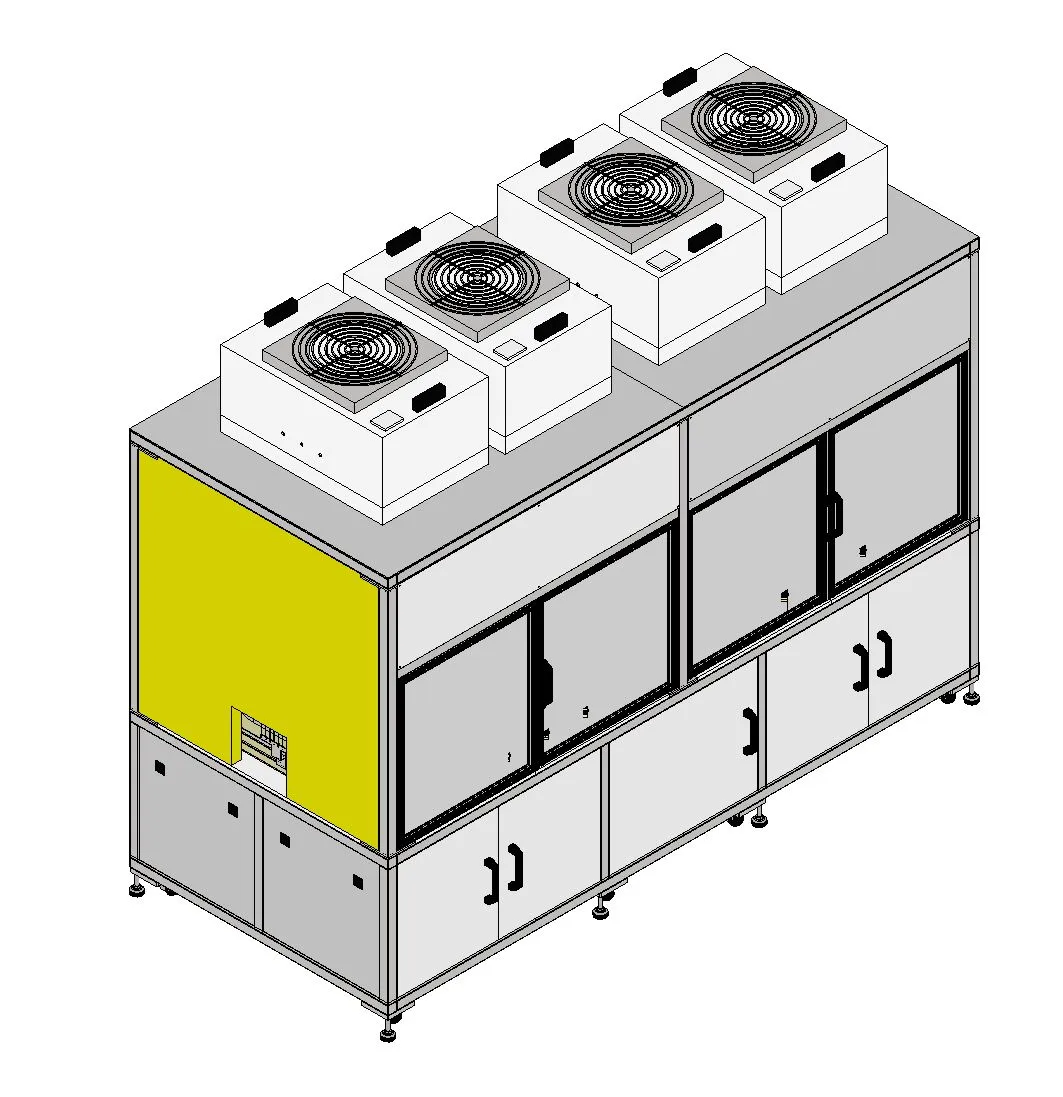
Motionwell builds electronics automation in Singapore for component testing, vision inspection and panel assembly. Delivered work includes FFU-filtered automatic test equipment and a vision-guided SCARA sensor panel assembly system.
Our electronics automation focuses on what drives yield: precision handling that protects sensitive components, inline verification at every station to stop defects propagating downstream, and SPC-ready data capture that helps you find and fix variation.
Who Builds Cleanroom Automated Test Equipment in Singapore?
Motionwell designs the fixture, handling, test sequence and data interface as one system. Start with the measurement and sample: automated test equipment covers test architecture, inline dimensional measurement covers measured geometry, and surface defect inspection covers visible defects. For substrate transfer between semiconductor process tools, wafer handling automation addresses carrier interfaces, contamination control and recovery.
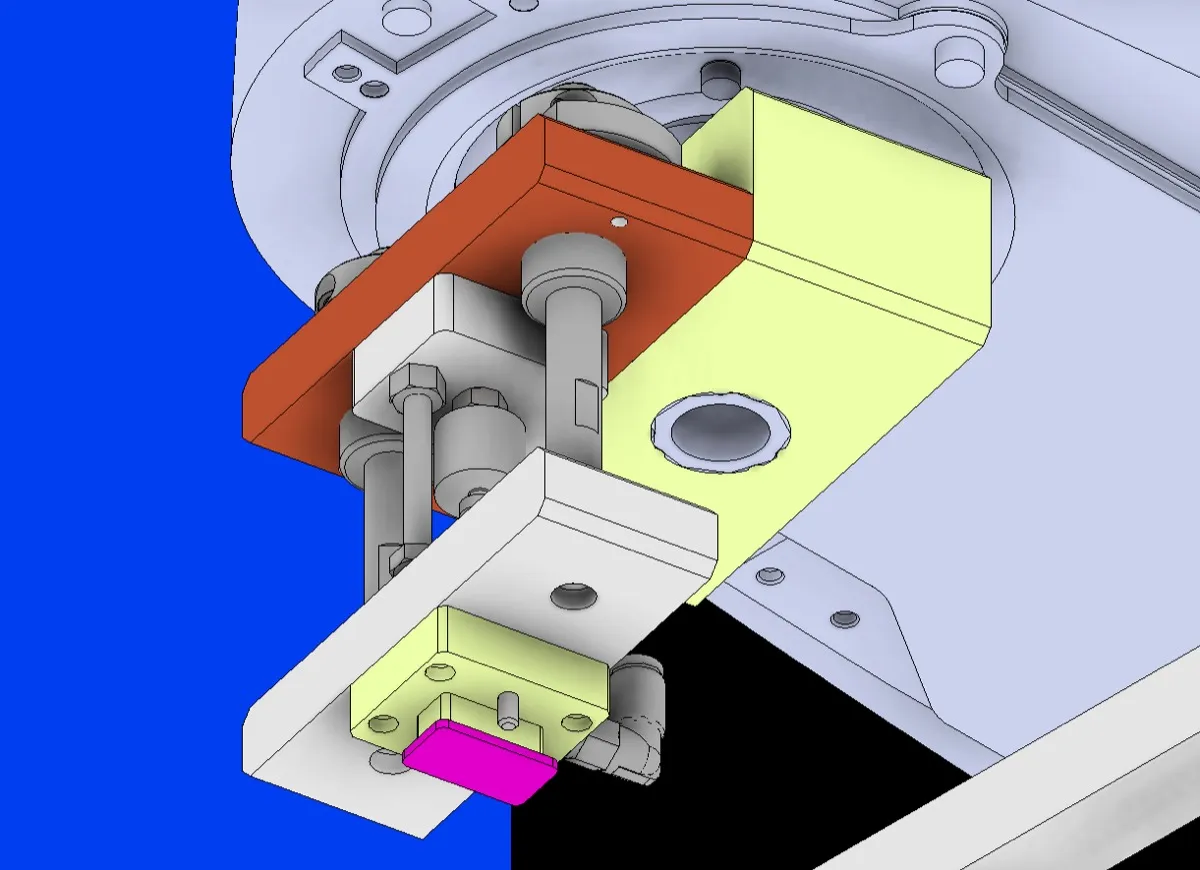
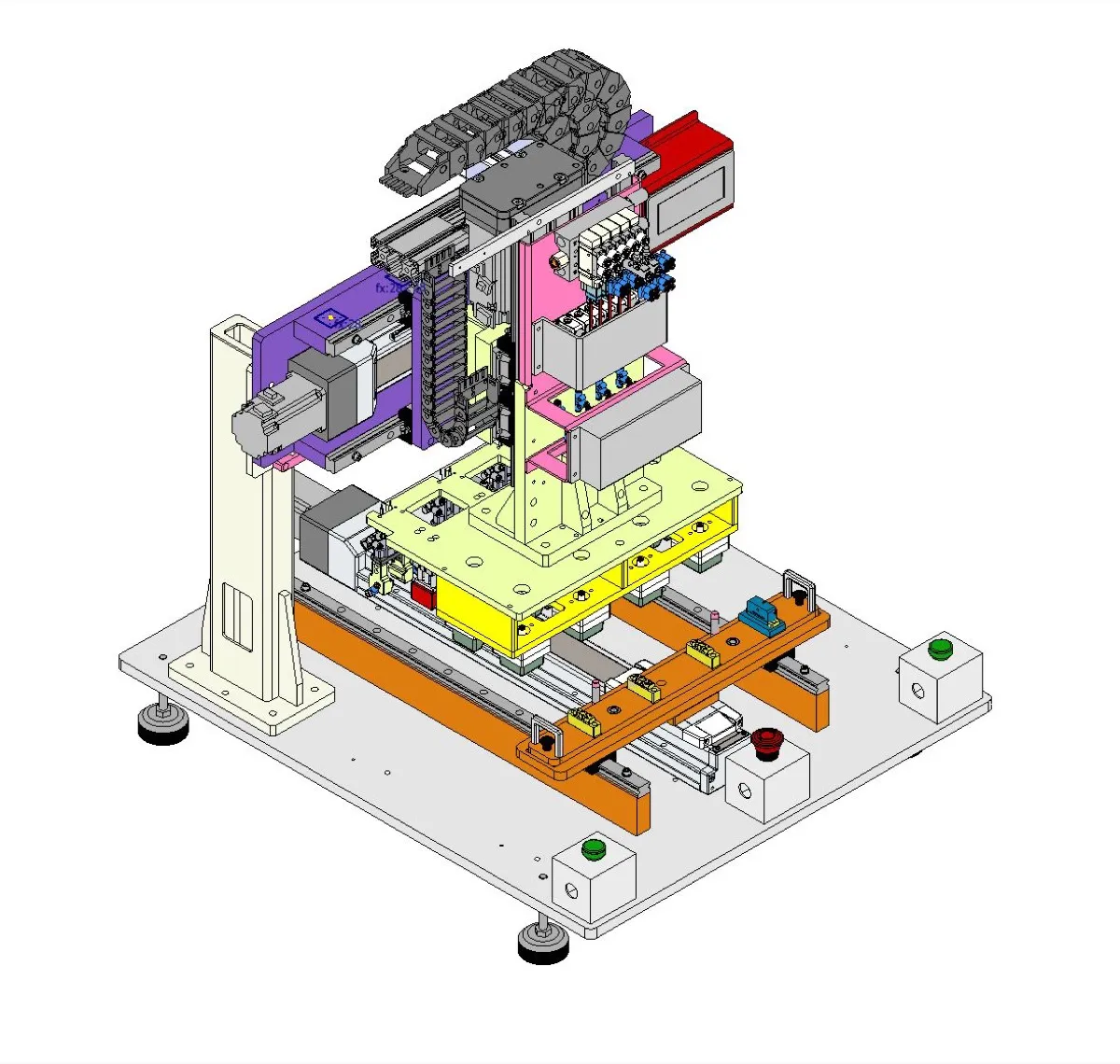
- SCARA panel assembly with vision-guided alignment, vacuum tooling and electric screwdrivers
- FFU-filtered ATE enclosures with multi-station circular transfer for cleanroom production environments
- Connector insertion and withdrawal force testing, cable bend fatigue testing, and multi-point sensor functional verification
- Vision-guided labeling with real-time position compensation and print quality verification
- Sub-millimetre positioning accuracy with servo-driven XYZ gantry modules and vision compensation
- ESD-aware workstation design with grounding, ionizers, and material handling protocols for sensitive components
- Inline test and verification at each station to catch defects before they propagate downstream
- SPC-ready data capture with station-level pass/fail counts, measurement logs, and yield trend reporting
- SCARA integration with vacuum EOAT, electric screwdrivers, and force-torque sensing
- High-resolution vision systems (2MP-25MP) with ring lighting, coaxial lighting, and programmable multi-recipe inspection
- PLC with HMI, pneumatic control, and real-time pressure and displacement monitoring
- Modular tooling platforms and XYZ gantry modules for fast product variant changeover
Board-level testing starts with a functional test fixture whose contact map and locating features match the device revision. Where the product also requires electrical withstand or insulation-resistance checks, specify the required hipot testing equipment and guarded sequence separately from functional measurements.
What Has Motionwell Built for Electronics Manufacturers?
Featured: Cleanroom ATE Series for Electronics Manufacturer
The ATE series combines automated specimen handling with mechanical and electrical tests inside a filtered enclosure. Circular transfer brings each specimen through the assigned sequence and back to a shared loading point. The cleanroom ATE case study follows the fixtures, test controls and result records.
- Delivered: five ATE variants
- Environment: FFU-filtered enclosure designed for ISO Class 7/8 production areas
- Test types: Insertion/withdrawal force, cable bend fatigue, sensor functional, multi-point measurement
- Control: PLC and HMI with recipe management, SPC-ready data export
Why Does a SCARA Suit Electronics Assembly?
A SCARA provides planar reach, vertical motion and rotation in a compact station. That suits panel placement and fastening when the required approaches lie within those axes. Tool support, fixture stiffness and vision calibration contribute to the result measured on the assembled panel. The SCARA robot guide compares application choices, and the panel assembly case study shows the delivered arrangement.
For electronics assemblies, crimping needs traceable terminal/wire combinations. wire termination automation covers tooling, preparation and the resulting test record.
For populated boards, insertion must preserve components and the receiving geometry. PCB insertion automation defines support, pin feeding and interrupted-cycle recovery.
Board separation needs the panel geometry and populated-product condition checked together. PCB depaneling selection compares process routes and the handling/test boundary.
Electronics soldering needs a demonstrated heat/material sequence for the joint. soldering process and inspection connects specialist process equipment with handling and final checks.
How Do You Measure Button Actuation Force Accurately?
Motionwell has built specialized button pressure testing equipment for electronics manufacturers requiring measurement at extremely low speeds. The system drives a load cell on a servo screw axis at 0.05 mm per second, an ultra-slow approach that allows accurate force measurement across the button actuation curve. A cylindrical probe fixed to the load cell contacts the product button, capturing the complete force-displacement profile.
Speed is the whole trick. Push faster and the dynamic response of the mechanism contaminates the reading, so the curve you record is the test rig, not the button. This kind of testing is required where button feel and actuation force are specified: consumer electronics interfaces, industrial control panels, and medical device inputs where the actuation force is part of the product specification.
How Does Vision Verify Labels and Codes at Line Speed?
Motionwell integrates label printing, code reading and label-position checks with the line controller. Quality grading is a separate requirement: the code type, applicable grading method and verification hardware are specified together. The controller tracks each inspection result to the reject point and confirms removal of a failed unit.
Manufacturers moving off manual visual inspection usually find the value is less in speed than in consistency: an automated grade is applied the same way on the last unit of a night shift as on the first. What vision can and cannot detect, and how to set the false-reject threshold, is covered in the machine vision inspection guide.
How Do Cleanroom and ESD Requirements Change an ATE Build?
Cleanroom requirements affect the machine’s airflow, materials, cable routing and maintenance access. FFUs supply filtered air over the test zone, with operating-state particle checks included in the installation’s verification plan. ESD controls are selected for the component and handling process, including grounding and ionisation where needed. The cleanroom automation guide explains how these requirements enter the design.
Test data is where this gets sensitive. Station-level pass/fail counts and measurement logs are only useful if they reach the SPC system intact, and a networked tester is an attack surface as much as a data source; the IEC 62443 industrial cybersecurity article covers how those connections are segmented.
For potted electronics, inspect the fill and required post-cure function separately. electronics potting verification connects material handling with the finished-assembly test.
A production PCB fixture needs controlled contact and board revisions. PCB test fixture verification ties probing, fixture identity and test software to the board record.
When Does a Ceiling-mounted Cobot Make Sense?
Where floor space is the constraint, Motionwell mounts collaborative robots overhead for pick-and-place and capping. Ceiling mounting frees the entire floor area for conveyors and operator access while keeping full robot reach, which suits compact electronics assembly cells with several stations in a small footprint. It costs you easy maintenance access, so it is a trade and not a free upgrade. We also have integration experience on customer-supplied collaborative robot cells where the plant already owns the arm, which is often the cheaper route in: the arm is bought hardware either way, and what decides whether the cell works is the tooling, the part presentation and the risk assessment around it.
Any overhead or shared-workspace arm needs a risk assessment before the layout is fixed: cobot safety standards covers what that assessment has to establish, and machine safety and compliance covers the guarding, interlocks and CE testing that follow from it.