
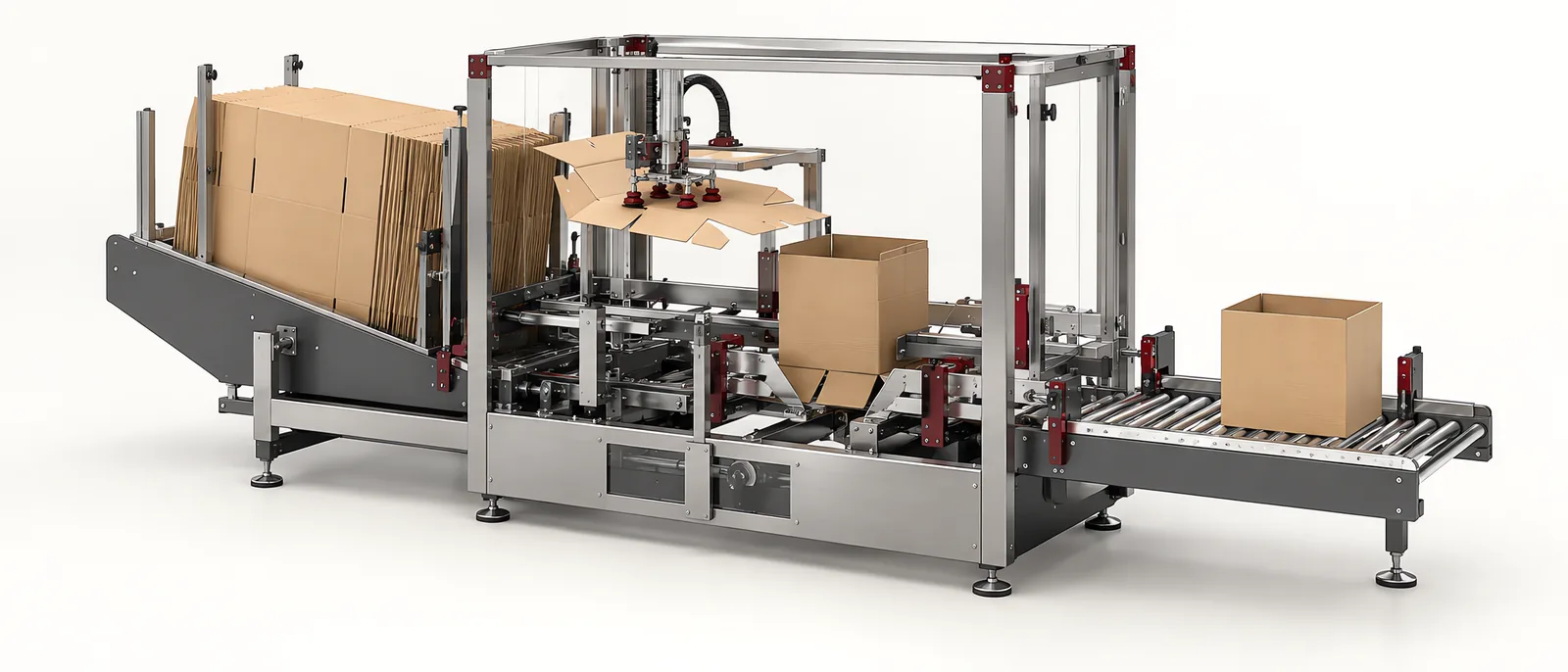
Conceptual equipment illustration.
A case erector opens flat corrugated blanks, forms the case and prepares its bottom for packing, typically using tape or hot-melt sealing equipment. The machine must work with the actual blank and deliver a stable case in the orientation required by the packer.
Start with the carton specification and production samples. Finished case length, width and height do not fully describe how a blank feeds, opens and folds.
Review the Blank as a Machine Component
Check board construction, score positions, joint quality, flatness and the way blanks are stacked in the magazine. A blank that opens easily by hand can still behave differently under a repeatable mechanical motion.
Include samples from more than one production batch when practical. Observe whether the opening method separates one blank reliably and whether the folds follow the intended scores. Record the conditions that cause a second blank to follow or a flap to catch.
Lantech’s C400 case-erector description highlights case control through the forming process and transition points. Those are useful areas to examine during a trial, even when evaluating a different machine.
Establish the Required Output Condition
The packer needs a case that is open, square enough for its loading method and supported at the bottom. Define the permitted distortion and the features used to locate the case downstream.
A case packing and wrapping system may load from above, from the side or through another arrangement. Match the erected case orientation to that loading method before fixing the conveyor layout.
| Interface | What the specification should state |
|---|---|
| Case format | Blank style and dimensional range actually supported |
| Bottom closure | Tape or adhesive system and the required completed condition |
| Discharge | Case orientation, height and transfer support |
| Demand | Required cases per minute and response to temporary stops |
| Refill | Magazine capacity, low-level indication and loading access |
Tape and Hot Melt Need Different Service Plans
For a tape arrangement, review tape application, cutting and the response to an empty or broken roll. For hot melt, review adhesive preparation, application and the time or support needed for the intended bond.
Trial the completed bottom closure with the intended product load and handling conditions. A case that leaves the erector successfully may still open or distort when filled. Keep the closure inspection linked to the carton and consumable specification.
The wider pharmaceutical and packaging automation scope can include product handling and inspection around this operation. The case erector itself remains a specific forming and supply station.
Prevent the Empty-Case Queue From Becoming the Constraint
Show the buffer between erector and packer in cases, not only metres. Define how the erector responds when that buffer is full and how it restarts when the packer requests another case.
At each conveyor handover, check the leading flap, bottom seam and contact surface. An empty case is light and can react differently from the loaded case used elsewhere on the line.
Accept a Format Change, Not Just a Steady Run
Change from one approved carton to another and verify guides, opening settings, sealing settings and discharge position. Check that the first cases are suitable for the packer without repeated manual correction.
Then test a downstream stop, low blank supply and a sealing-consumable interruption. Record recovery time and any cases that must be removed. These tests belong in the packaging-line integration plan, alongside normal throughput.