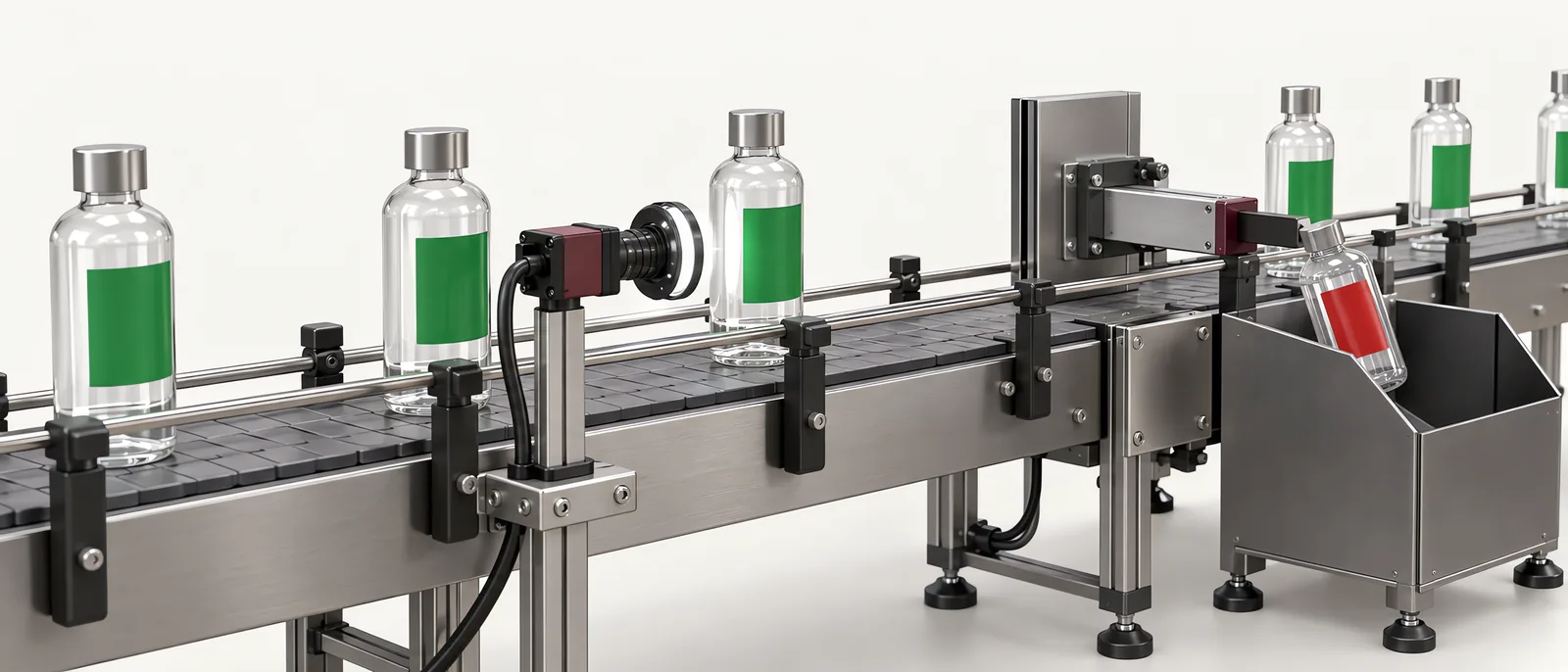
Conceptual equipment illustration.
A label inspection system should answer specific questions: is the label present, is it the correct label, is it positioned acceptably, and is its variable information correct? These checks need different image features and decision rules. A readable barcode alone does not answer all of them.
Start with a defect list and examples. It should include acceptable variation as well as failures, so that the system does not reject normal print or application differences unnecessarily.
Separate Appearance, Identity and Content
| Requirement | Evidence to inspect | Example challenge |
|---|---|---|
| Label presence | Expected label area or feature | Missing label |
| Application quality | Position, edge or surface condition | Skew, fold or lifted edge |
| Correct product label | Agreed artwork or encoded identity | A similar label from another SKU |
| Variable text | Characters compared with expected data | Incorrect lot or date |
| Code readability | Successful decode under the specified setup | Poor contrast or damaged code |
Cognex’s OCV documentation describes optical character verification as checking characters against expected content. That expectation must come from a controlled recipe or production-data source. Recognising a string is not enough if the system does not know what it should contain.
The code reading and traceability scope addresses the data association. The labelling and coding equipment controls where and how the information is applied.
Obtain a View of Every Required Feature
Choose the camera position and lighting around the defects, not simply the available mounting space. Curved containers, glossy labels and transparent films can hide information at particular viewing angles. A single side view may not cover the entire circumference.
Trial the actual print finishes and permitted container rotation. Check the smallest relevant feature at production exposure settings. If motion blur or reflections obscure that feature, changing the inspection algorithm may not recover the missing image information.
The machine vision inspection design should state what each view can see and what it cannot see. Use that coverage definition when agreeing the defect set.
Control the SKU Change
Associate artwork references, text expectations, barcode rules and position limits with the correct product recipe. At a changeover, verify the active recipe against the intended production order and a representative sample.
Include a near-match challenge: a wrong label that looks similar to the correct one. This tests whether the inspection distinguishes product identity or merely detects a familiar-looking label.
For pharmaceutical and packaging applications, retain the required batch or item context with the inspection result. The record should identify the rule that failed, not only contain a generic reject count.
Follow the Item Through Rejection
Give each inspected item a position or sequence association and maintain it to the reject point. Define what happens when image acquisition fails, the inspection times out or tracking is lost during a stop.
Challenge the mechanism with consecutive failed items and a failed item between acceptable products. Verify physical removal and the response to a full reject container or failed confirmation. The inspection result and the removal result should remain distinguishable.
Accept the System Against a Retained Sample Set
Keep representative good and defective samples, with agreed expected outcomes. Run them at the operating speed and permitted presentation variations. Record missed defects and false rejects separately.
Repeat the relevant checks after lighting, camera, label material or artwork changes. Retaining representative images from failed inspections can shorten diagnosis, provided image identity and storage rules are defined in the system.
Talk to Motionwell about the label defects your line needs to detect.