
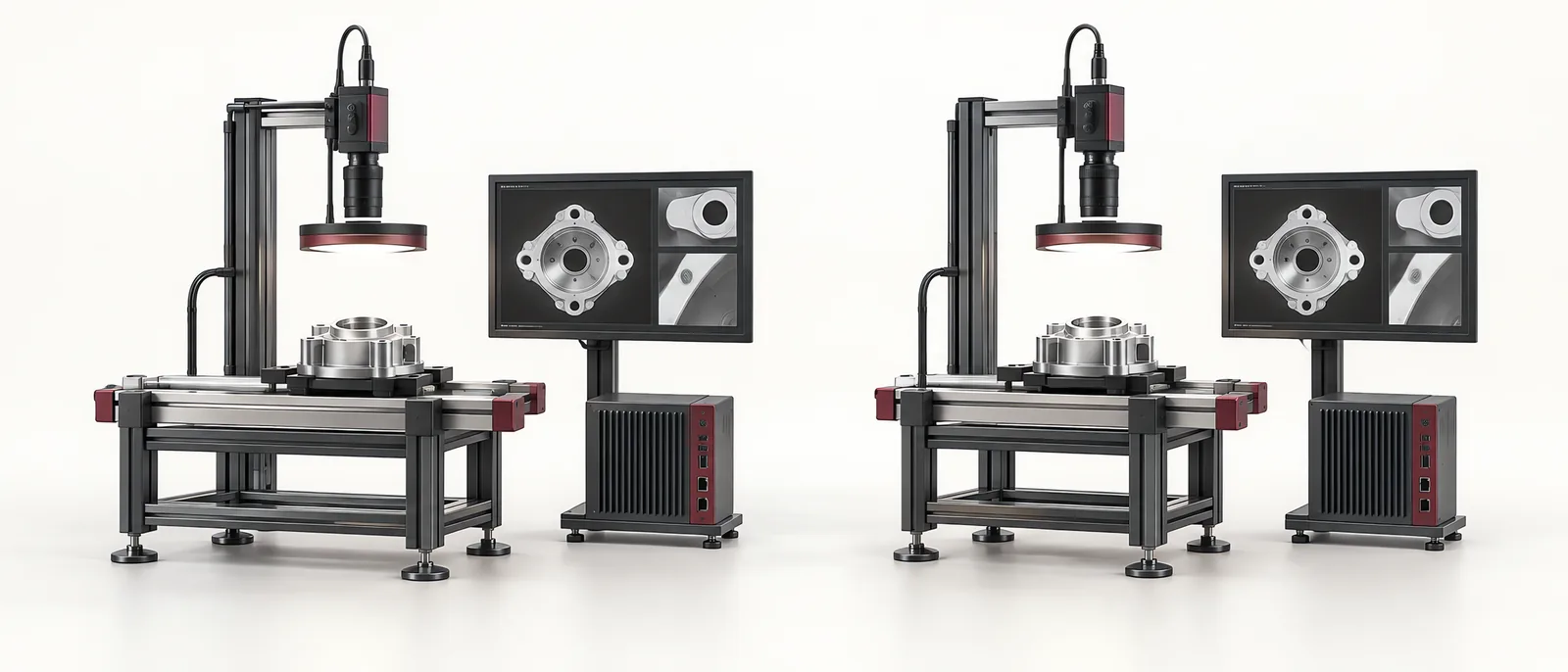
Conceptual equipment illustration.
A Cognex vs KEYENCE comparison should use the same inspection task, sample set and acceptance criteria. Both names cover multiple product categories. Comparing a simple presence sensor with a programmable multi-camera system says little about which supplier suits the actual job.
First decide whether the task needs a barcode reader, a configurable vision system, PC-based software or a dimensional sensor. Then compare named products in the relevant category.
Avoid a Mismatched Comparison
Cognex VisionPro is PC-based vision software with rule-based and AI-related capabilities. KEYENCE CV-X is a configurable vision-system range incorporating cameras and lighting options. These examples illustrate why the brand name is not a complete architecture description; they are not a matched hardware pair.
For each proposal, identify the processing platform, camera configuration, optical setup and software functions actually included. Compare the full system needed to perform the task.
The machine vision inspection guide provides the application questions that should come before product selection.
Prepare One Trial Pack for Both Proposals
Give both trials the same definition of an acceptable part and the same difficult examples. Include normal production variation, near-limit defects and the expected presentation range. Keep a separate set of samples for checking the configured solution after development.
Ask for a result record containing:
- Accepted and rejected sample identities.
- Missed defects, false rejects and invalid inspections.
- Acquisition and decision time under the intended sequence.
- Images needed to explain the failed or uncertain results.
- Hardware, software and settings used for the trial.
A demonstration that recognises several selected good parts does not establish the error behaviour on the production range.
Compare the Integration Work
| Area | Evidence to request |
|---|---|
| Trigger and part tracking | Result belongs to the correct physical item |
| PLC communication | Required data and fault states reach the selected controller |
| Recipe changes | Correct job and limits are selected and confirmed |
| Image retention | Required images can be stored, identified and retrieved |
| Maintenance | Production can diagnose common faults and restore the setup |
| Expansion | The proposed configuration supports the named additional task |
Image storage is configuration-dependent. Check interfaces, capacity and retrieval behaviour on the proposed product; do not assign an unconditional image-retention advantage to either brand.
For code reading and traceability, test the required symbology and data comparison. For in-line dimensional measurement, test the measurement against the relevant reference and tolerance. These are different acceptance exercises.
Evaluate the People and the Handover
Have the intended maintenance team perform a recipe selection, reference check and backup restoration. Record the access rights, licences and files they need. A system with a powerful toolset can still be difficult to support if its configuration is undocumented.
Obtain current supplier commitments for the actual location, equipment and scope. Compare training, spare parts and support arrangements as quoted items, not assumptions about either company’s general reputation.
Make the Decision Traceable
Summarise the demonstrated results and unresolved application limits beside the complete commercial scope. If one proposal requires different lighting or additional cameras, include them in the comparison before judging cost or performance.
Motionwell’s machine vision inspection services focus on the inspection and machine integration task. Talk to us about the parts and defects you need to assess.