
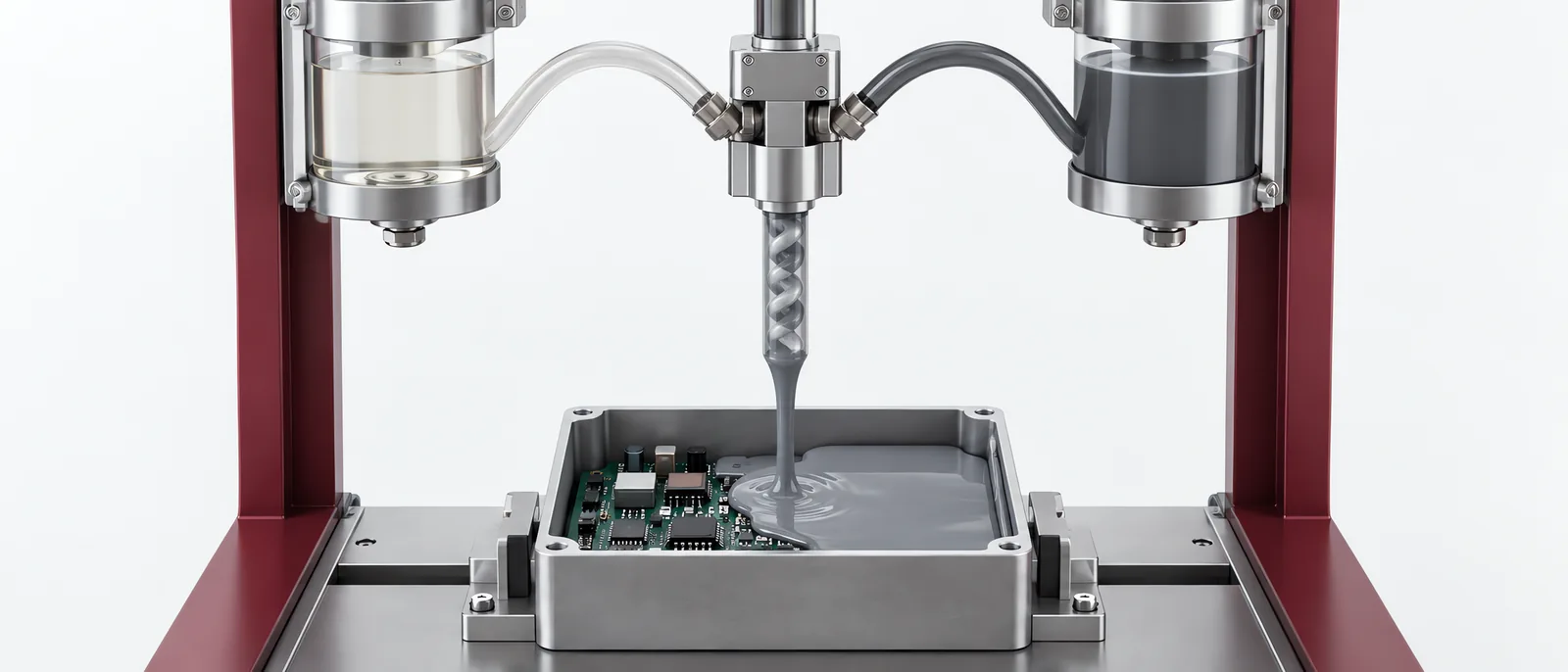
Conceptual equipment illustration.
An epoxy potting machine must deliver the specified resin mixture into a cavity and produce an acceptable cured assembly. Start with the material’s mixing ratio, working time and cure requirements. A repeatable shot volume alone does not establish that the compound mixed correctly or filled the space around the components.
This is a process within custom automation, with material preparation and finished-product verification connected to the dispensing equipment.
Preserve the Ratio Definition
A resin specified as 2:1 by volume is not automatically 2:1 by mass. Component densities are needed to convert between those bases. Keep the supplier’s stated ratio and units in the recipe and in the verification method.
Nordson’s two-part epoxy dispensing guide distinguishes premixed dispensing from meter-mix arrangements and explains why pot life constrains equipment choice. A mixed material can continue curing inside the fluid path during a production pause.
Agree how each component’s delivery is checked, how the mixer is verified and what happens after the maximum permitted idle period. Do not assume that measuring the combined shot proves the A/B ratio.
Trial Filling Before Selecting Vacuum
The cavity shape and component arrangement determine where air can remain trapped. Plan the nozzle path and filling sequence around those spaces. Test a sectioned sample or another suitable inspection method to establish whether the important regions are filled.
Vacuum can support some material/process combinations, but it is not a substitute for evaluating the resin and geometry. Confirm the material’s permitted handling conditions and trial the actual process before making vacuum a mandatory machine feature.
The dispensing and adhesive systems scope covers the motion and fluid-handling architecture. Potting adds a requirement to inspect a filled volume, not only a visible deposited bead.
Cure and Finished-Assembly Checks
Record material batch, preparation, dispensing time and the specified cure history. A visually full cavity can still contain an incorrect mixture or damage that only appears after cure.
For an electronics assembly, separate these checks:
- Fill amount and coverage immediately after dispensing.
- Cured condition and voids where they matter to the product.
- Required electrical or functional result after the agreed cure stage.
Use the automated test equipment interface to retain the association between assembly and test result. Do not let a dispensing-complete signal stand in for a passed product.
Include restart after a long pause in the machine trial. Record purge, mixer change and first-part verification so that recovery does not depend on an operator remembering an undocumented sequence.
Contact Motionwell about the potting process to discuss the fluid path, part handling and result checks as one station.