
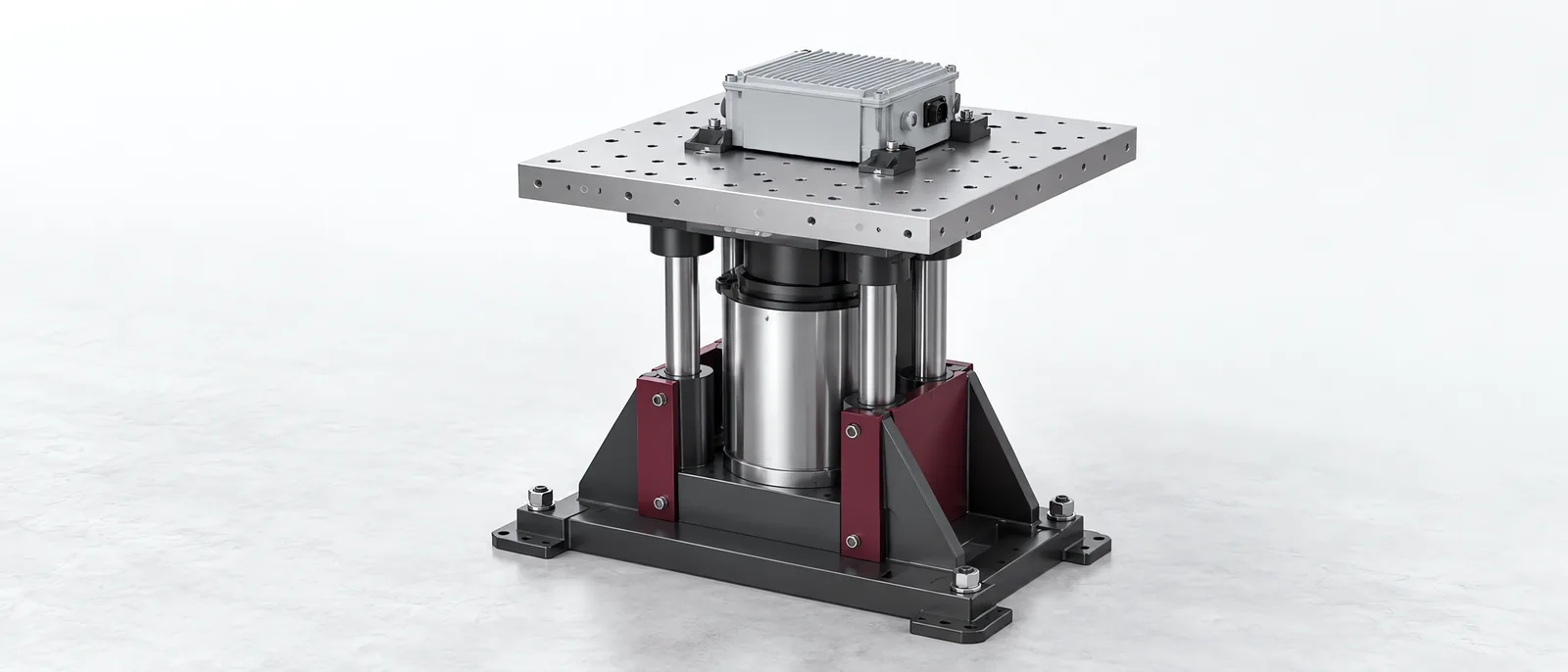
Conceptual equipment illustration.
Mechanical shock testing subjects a product to a controlled transient acceleration event. Specify pulse shape, peak acceleration, duration, direction and repetitions together. A peak value on its own cannot describe the event the product must withstand.
This differs from the repeated excitation covered by a vibration-testing machine, and from pendulum impact tests used to determine material properties. An automated laboratory workflow should preserve the correct method and specimen record for each.
Match the Machine to the Required Pulse
Shock tables use different mechanisms and pulse-forming arrangements. Lansmont’s P65/81 system lists pulse programmers for half-sine, trapezoidal and terminal-peak sawtooth events. Confirm the attainable pulse envelope of the selected configuration at your loaded mass.
Ask the supplier to demonstrate the specified event with the intended fixture and loaded mass. Retain the measured time history and compare it with the pulse acceptance criteria.
The Table and Product Can Respond Differently
A sensor on the table measures the input at its mounting location. A sensor on the product measures that product’s response. Fixture flexibility and product resonances can make those traces different.
Before the trial, define the mounting condition. A rigidly bolted electronic enclosure and the same enclosure supported inside transport packaging represent different tests. Record fasteners, fixture orientation and payload placement so that subsequent samples see comparable input.
Include the complete fixture and instrumentation mass when checking the machine configuration. A catalogue payload limit is not an independently verified pulse envelope for your setup.
Make the Failure Record Usable
Prepare a test record that separates these outcomes:
- The commanded pulse was not achieved within the agreed tolerance.
- The pulse was achieved, but the product developed a visible or functional failure.
- The pulse was achieved and the product completed the specified post-test checks.
The first outcome is an invalid or failed test execution, not evidence that the product passed. Inspection should include the functions named in the product requirement; visual condition alone may miss an intermittent electrical connection.
If software initiates the test, it should wait for the instrument’s completion and result status. Sample identification, raw traces and post-test results can then remain associated in the automated test equipment record.
Use the factory acceptance test checklist to agree this sequence before handover. Talk to Motionwell about coordinating the instrument, sample handling and result collection.